How Peptide Therapy Can Help with Fluctuating Estrogen Levels
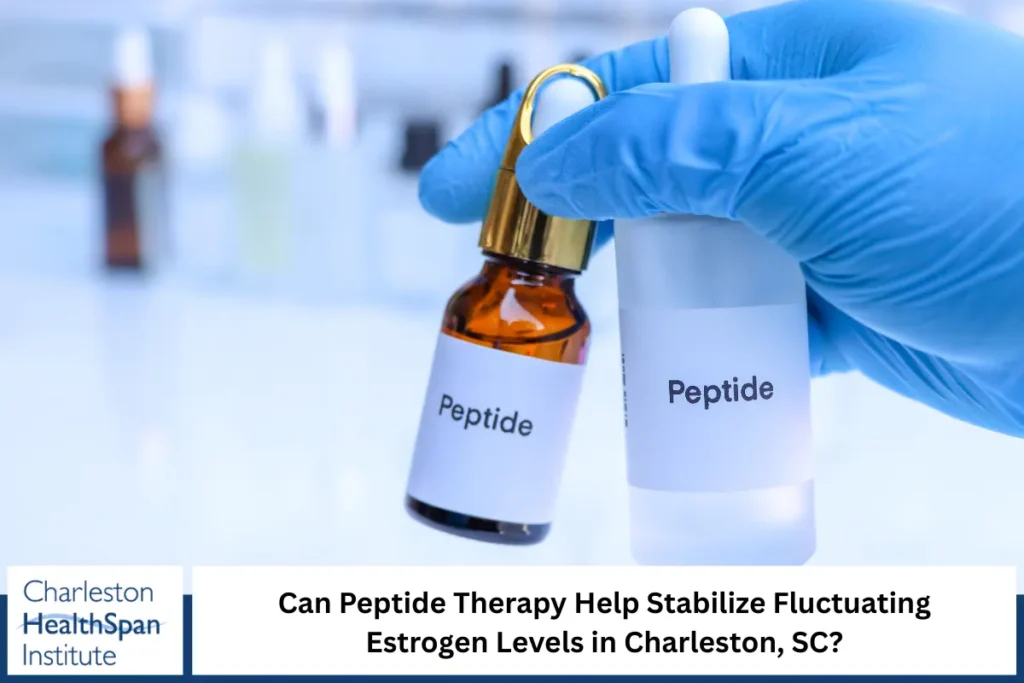
Peptide therapy is gaining serious attention from women across Charleston, SC who are dealing with the frustrating effects of unstable estrogen. If you have been struggling with hot flashes one week, anxiety the next, and a midsection that seems to grow no matter what you eat, you are not imagining things. Estrogen naturally fluctuates during perimenopause and menopause, leading to various symptoms that can derail your quality of life. Peptide therapy can help manage menopause-related symptoms by improving the way your body communicates hormonally, but it is not a stand-alone magic fix. Combined with the right testing and clinical guidance, it can be a meaningful piece of the puzzle.
Estrogen fluctuations in perimenopause, menopause, and post-partum phases trigger symptoms that range from weight gain and brain fog to sleep disruption and joint pain. These are not minor inconveniences. They affect careers, relationships, and mental health.
Specific peptides like kisspeptin analogs and growth hormone secretagogues can improve communication between the brain, ovaries, adrenal glands, and fat tissue. Peptides stimulate the body’s natural hormone production rather than flooding the system with exogenous hormones. This means the body’s ability to regulate itself gets a nudge in the right direction, indirectly supporting more consistent estrogen signaling.
In Charleston, SC, peptides are used as part of an integrated hormone optimization strategy that may also include lifestyle changes and hormone replacement therapy when clinically appropriate. Many women start searching for “peptide therapy near me” or “hormone therapy clinic Charleston” after noticing cyclical mood changes, new belly fat, or stubborn weight loss resistance that diet and exercise alone cannot fix.
Key Takeaways
Peptide therapy may help stabilize fluctuating estrogen levels for many women in Charleston, SC, especially when paired with a careful hormone optimization plan overseen by a licensed hormone doctor. Peptides do not replace estrogen directly. Instead, they influence hormone signaling, metabolic efficiency, and overall hormonal balance under medical supervision.
- The strongest outcomes come from combining peptide therapy with comprehensive lab testing, lifestyle adjustments, and, when clinically appropriate, bioidentical hormone replacement therapy.
- All treatment in Charleston, South Carolina must be prescribed and monitored by a licensed clinician within a regulated hormone therapy clinic.
- This article covers which key peptides are most relevant to estrogen regulation, what the process looks like from initial consultation onward, and safety considerations specific to Charleston residents.
- Peptide therapy is not considered a standard treatment for directly stabilizing estrogen, but growing research supports its role in broader hormone balance strategies.
- Weight loss resistance, mood changes, and sleep disruption tied to estrogen shifts can often improve when peptides are part of a personalized treatment plan.
Why Estrogen Balance Matters for Women’s Health and Weight in Charleston
Estrogen is not just a fertility hormone. It plays a direct role in metabolism, mood regulation, bone density, cardiovascular health, skin elasticity, and cognitive function. When estrogen levels swing unpredictably, the effects show up everywhere.
Here are some of the most common complaints tied to fluctuating estrogen among women in Charleston:
- Midsection weight gain and water retention
- Night sweats and disrupted sleep quality
- Anxiety, irritability, and mood swings
- Decreased exercise tolerance and energy levels
- Thinning skin and reduced collagen production
Many women in their late 30s to early 50s experience perimenopausal hormonal imbalance compounded by stress, irregular sleep, and sedentary work patterns. Charleston’s warm climate and high humidity can exacerbate sleep disruption, adding another layer to an already complicated picture.
Inconsistent estrogen does not act in isolation. It interacts with thyroid hormones, cortisol, and insulin, creating a hormonal “traffic jam” that makes traditional calorie-cutting weight loss plans far less effective. Insulin resistance tends to increase during menopause, and visceral fat accumulation drives higher aromatization of androgens into estrogen, which can create estrogen excess or subtype imbalances.
Peptide therapy improves energy levels and metabolism by targeting these upstream disruptions. When peptides support better hormonal balance and metabolic efficiency, medically supervised weight loss programs become safer and more sustainable.
What Peptide Therapy Is and How It Differs from Hormone Replacement
Peptide therapy involves using short chains of amino acids that function as powerful signaling molecules to influence how the body regulates itself. These chains of amino acids are naturally present throughout the body, governing everything from immune function to tissue repair to hormone production. Therapeutic peptides are designed to mimic or amplify these natural processes.
Unlike hormone replacement therapy, which supplies estrogen, progesterone, or testosterone directly to compensate for declining levels, peptide therapy focuses on working “upstream.” It targets the signaling pathways and cellular responsiveness that govern how hormones are produced, released, and received. Peptide therapy works by encouraging the body’s natural production rather than replacing hormones directly.
The main goals of peptide therapy in this context include:
- Supporting hormone balance across the hypothalamic-pituitary-gonadal axis
- Enhancing collagen production for skin health and skin rejuvenation
- Improving sleep quality and reducing fatigue
- Assisting with fat loss, fat burning, and muscle preservation
- Promoting overall wellness and body composition improvements
In Charleston, licensed clinicians must prescribe peptides. Over-the-counter or internet “research peptides” are not appropriate for medical hormone therapy. Synthetic peptides obtained outside of regulated channels carry risks of contamination and inaccurate dosing that can undermine results and safety.
Typical administration involves peptide injections given subcutaneously, with frequency depending on the specific peptides prescribed and the individual treatment plan. Ongoing medical supervision and periodic lab monitoring are required to track progress and minimize risks.
Key Peptides Related to Estrogen Regulation, Mood, and Metabolism
Different peptides target different aspects of hormonal balance. Some influence reproductive hormone release at the level of the pituitary gland and hypothalamus. Others support growth hormone output, tissue repair, or inflammation reduction. The selection of specific peptides depends on individual lab work, age, symptoms, and goals, not a one-size-fits-all formula.
Here are some of the key peptides relevant to estrogen regulation and metabolic health:
- Kisspeptin and kisspeptin receptor agonists: Kisspeptin regulates key reproductive hormones like LH and FSH, which are follicle stimulating hormone and luteinizing hormone, the two gonadotropins that govern ovarian estrogen and progesterone output. Clinical trials of MVT-602, a kisspeptin receptor agonist, showed dose-dependent LH surges and ovulation rates reaching 100% at the highest dose in premenopausal women. This makes kisspeptin analogs especially relevant for women with irregular cycles or ovulatory dysfunction during perimenopause. Peptide therapy can restore hormonal signaling effectively through this pathway.
- CJC-1295 and Ipamorelin: This combination functions as a growth hormone secretagogue, stimulating the pituitary gland to release more growth hormone in a pulsatile, physiologic pattern. Improved growth hormone levels support lean muscle mass, fat breakdown, fat loss, and more stable blood sugar, which indirectly supports better estrogen balance and energy levels. Growth hormone-releasing peptides enhance muscle growth and recovery, making them valuable for women losing muscle mass during hormonal transitions.
- BPC-157 and healing peptides: These peptides reduce systemic inflammation, support gut integrity, and may indirectly benefit hormonal balance by improving nutrient absorption and reducing the cortisol burden that worsens estrogen instability. Peptide therapy can improve hormone signaling and tissue repair through these mechanisms, even though direct estrogen modulation is not their primary function.
- Collagen peptides and support compounds: While collagen peptides are more commonly associated with skin aging and promoting collagen production, they contribute to skin elasticity and overall connective tissue health, which estrogen decline significantly affects.
These are chosen based on comprehensive lab testing, clinical assessment, and a clear understanding of where each patient’s hormonal disruption originates. A natural peptide approach means working with the body rather than overriding it.
Read Is Peptide Therapy Useful for Perimenopause Hormone Changes in Charleston, SC?
Peptide Therapy vs. Traditional Hormone Replacement for Estrogen Issues
Peptide therapy and bioidentical hormone replacement each approach estrogen fluctuations from different angles. Many modern protocols at a hormone therapy clinic in Charleston use both in combination for optimal results.
Menopausal hormone therapy is the most evidence-supported treatment for low estrogen symptoms. Traditional hormone therapy provides bioidentical estrogen and progesterone, and sometimes testosterone, via creams, patches, oral forms, or pellets to directly restore deficient levels. The FDA recently updated labeling on these medications in February 2026, removing certain boxed warnings related to cardiovascular disease and breast cancer based on newer evidence. This has shifted the risk-benefit conversation significantly.
Peptide therapy can be layered alongside hormone replacement to refine hormone balance, improve receptor sensitivity, support collagen production, and help mitigate stubborn symptoms like low libido, poor sleep, or weight gain. Peptides stimulate the body’s natural hormone production without replacing hormones, which means they complement rather than duplicate what hormone replacement does.
Some women who are not yet good candidates for full hormone replacement, whether due to age, risk factors, or personal preference, may benefit from starting peptide therapy combined with lifestyle changes under a hormone doctor’s care. Peptide therapy is not considered a standard treatment for directly stabilizing estrogen, but when used strategically, it addresses the metabolic and signaling issues that make estrogen instability worse.
The choice between peptide-only, hormone replacement, or a combined protocol is always made after a detailed initial consultation, full hormone panels, and a review of personal and family risk factors. There is no shortcut around this step. Replacing hormones directly without understanding the full picture can create new imbalances rather than fixing existing ones.
What to Expect from a Medically Supervised Peptide Program in Charleston
In Charleston, SC, peptide therapy for estrogen-related symptoms must be integrated into a structured, physician-directed program. This is both a clinical best practice and a legal requirement under South Carolina medical practice regulations.
The process typically unfolds like this:
Initial consultation: Your hormone doctor reviews symptoms such as hot flashes, PMS changes, weight gain, and fatigue. Past treatments, current medications, personal history, and family history are all examined, with particular attention to breast cancer, clotting disorders, and cardiovascular disease. This initial consultation sets the foundation for everything that follows.
Baseline lab work: A comprehensive panel is drawn, usually including:
- Estradiol, estrone, progesterone, testosterone, and SHBG
- Thyroid studies (TSH, free T3, free T4)
- Cortisol and DHEA for adrenal assessment
- Fasting glucose, insulin, and a full lipid panel
- IGF-1 to assess growth hormone activity
- Liver and kidney function markers
Personalized treatment plan: Based on results, your provider designs a plan that may include specific peptides, lifestyle prescriptions covering nutrition, resistance training, and sleep, and possibly low-dose hormone replacement. Customized peptide therapies specifically target female hormone health and are offered in Charleston through qualified clinics.
Timeline: Peptide therapy typically shows results within 2 to 6 weeks for symptoms like mood, sleep, and energy. Metabolic changes and measurable shifts in body composition may take 3 to 6 months of consistent therapy and lifestyle adjustment. A few weeks of patience at the start is normal.
Follow-ups: Regular follow-ups are essential to monitor treatment efficacy. Expect visits every few months to adjust doses, repeat key tests, and ensure safe, gradual hormone optimization. Starting peptide therapy is the beginning of a process, not a one-time event.
Safety, Legal, and Ethical Considerations in South Carolina
In South Carolina, peptides used for hormone or weight loss purposes are prescription medications. They must be ordered by a licensed clinician from regulated pharmacies. This is non-negotiable.
Reputable clinics rely on 503A or 503B compounding pharmacies that follow FDA and state Board of Pharmacy standards. Peptides must be sourced from FDA-regulated pharmacies for safety, and high-purity sourcing reduces the risk of contamination and dosing errors that plague unregulated products.
South Carolina regulations require an established provider-patient relationship, a physical or telehealth evaluation, and appropriate documentation before prescribing SC peptide therapy or hormone replacement. Physician assistants may prescribe under supervision with written scope-of-practice guidelines.
Peptide therapy is generally considered safe when monitored by professionals. Peptide therapy is administered under medical supervision for safety, and this supervision includes watching for:
- Mild side effects, which include redness or swelling at injection sites
- Transient fluid shifts or mild headaches
- Monitoring IGF-1 levels when growth hormone secretagogues are prescribed
Serious side effects from peptide therapy are rare but must be promptly reported to the prescribing hormone doctor. It is also worth noting that many marketed peptide therapies lack robust clinical evidence for managing estrogen fluctuations directly. Transparency about what is well-supported and what remains investigational is part of ethical practice.
Avoid online “research peptides,” non-medical weight loss spas, or unsupervised protocols. These fall outside the standard of care and may conflict with South Carolina practice rules. Is peptide therapy safe when obtained from unregulated sources? No, and the risk is not worth taking.
Building a Long-Term Strategy for Hormone Balance and Weight Management
Peptide therapy works best as part of a broader healthspan strategy rather than a short-term fix. This is especially true for women dealing with fluctuating estrogen and stubborn weight in midlife. Achieving and maintaining optimal health requires a multi-layered approach.
Nutrition: Pair peptides with targeted nutrition that includes adequate protein, fiber, healthy fats, and reduced ultra-processed foods. A balanced diet supports hormone metabolism and liver detoxification of estrogen. Some peptide therapies assist in detoxifying excess estrogen, but nutrition does the heavy lifting on this front.
Exercise: Resistance and strength training protect bone density, maintain muscle mass, improve insulin sensitivity, and amplify the benefits of both peptides and hormone therapy. Muscle growth from consistent training also supports fat burning and weight management long-term.
Stress and sleep: Stress management and improving sleep quality are essential to keeping cortisol in check. Chronic stress worsens estrogen imbalance and can undermine even the best weight loss program. Peptide therapy can improve sleep quality and reduce fatigue, but it cannot override the damage of chronic sleep deprivation or unmanaged stress. These lifestyle factors matter as much as any injection.
The integrated approach: A modern, evidence-informed plan in Charleston often blends peptide therapy, carefully dosed hormone replacement, and lifestyle medicine to restore balance and help women feel more stable, lean, and energetic. The goal is to restore hormonal balance across the entire endocrine system, not just patch one number on a lab report. This means addressing the body’s natural processes holistically, from the endocrine glands to the gut to the nervous system, and supporting the natural production of hormones wherever possible. When you combine optimal results from peptides with the right lifestyle changes, you create conditions where the body can truly recalibrate.
Peptide therapy improves energy levels and balances hormones, but only when it is part of a comprehensive strategy that includes everything from what you eat to how you move to how well you sleep. The right personalized treatment can alleviate symptoms that have been holding you back for years.
Peptide Therapy in Charleston, SC – Charleston Healthspan Institute
At Charleston Healthspan Institute, we specialize in medically supervised peptide therapy and hormone optimization for women and men throughout Charleston, South Carolina and the surrounding areas. Our hormone doctor team uses comprehensive lab testing and advanced peptide protocols to create individualized plans tailored to your specific needs, whether you are dealing with estrogen imbalance, weight loss resistance, low energy, or age-related hormone shifts.
We believe in regenerative medicine that works with your body, not against it. Our approach combines peptide therapy, hormone replacement therapy when appropriate, and lifestyle coaching to deliver real, measurable improvements in how you feel and function.
Ready to take the next step? Call us at (843) 375-6588 or fill out our online contact form to schedule your initial consultation. At Charleston Healthspan Institute, every protocol is delivered under strict medical supervision with an emphasis on safety, science-based care, and long-term healthspan improvement.
Frequently Asked Questions
Can peptide therapy help if my estrogen levels are already “normal” on lab tests?
Yes, in many cases. Standard lab reference ranges are broad, and a result that falls within “normal” does not always mean your levels are optimal for you. Some women experience significant symptoms even when their estradiol reads within range because the issue is not the absolute number but the rate of fluctuation, receptor sensitivity, or how estrogen interacts with progesterone and cortisol. Peptide therapy focuses on improving the signaling between specific receptors and the endocrine glands that produce hormones. A skilled hormone doctor will look beyond the reference range and assess your full clinical picture, including symptoms, trends over time, and ratios between hormones, to determine if peptides can help.
How long does it usually take for peptide therapy to affect estrogen-related symptoms?
Most women notice initial shifts in mood, sleep, and energy within two to six weeks of consistent use. However, more substantial changes in body composition, metabolic efficiency, and measurable hormone stabilization typically require three to six months. The timeline depends on which peptides are prescribed, your baseline hormonal status, and how consistently you follow the full treatment plan, including nutrition, exercise, and stress management. Patience matters. Peptides work by gradually restoring the body’s signaling pathways, which is a slower process than taking exogenous estrogen but may produce more sustainable improvements over time.
Is peptide therapy appropriate for women in their 30s, or is it only for menopause?
Peptide therapy is not limited to menopause. Women in their 30s can experience early hormone imbalances from stress, polycystic ovary syndrome, post-partum recovery, or premature ovarian changes. In these cases, certain peptides that support hormonal signaling, such as kisspeptin analogs or growth hormone secretagogues, may be relevant. However, the risk-benefit analysis differs by age and life stage. A woman trying to conceive will have different considerations than one managing perimenopause. The critical step is a thorough evaluation by a hormone doctor who can assess fertility goals, underlying conditions, and whether peptides are the appropriate tool at that stage.
Will insurance cover peptide therapy for estrogen issues?
Insurance coverage varies significantly based on treatment type and plan. Most private insurance plans in South Carolina do not cover compounded peptides prescribed for hormone optimization or weight management because these are not FDA-approved for those specific indications. FDA-approved hormone replacement therapies are more likely to receive coverage. Some patients use health savings accounts or flexible spending accounts to offset costs. During your initial consultation, your provider should be transparent about expected out-of-pocket expenses and help you understand which portions of your care, such as lab work or office visits, may be billable to insurance.
Can peptide therapy be combined with non-hormonal treatments like SSRIs or IUDs?
In many cases, yes, but coordination between all treating providers is essential. SSRIs are sometimes prescribed for hot flashes or mood symptoms during perimenopause, and hormonal or non-hormonal IUDs serve a separate contraceptive or endometrial function. Peptide therapy does not typically interfere with these treatments, but interactions depend on the specific peptides used and your overall medication profile. Your hormone doctor should review your full medication list, communicate with your gynecologist or psychiatrist as needed, and monitor for any overlapping effects on serotonin, hormone levels, or metabolic markers. Never start or adjust any treatment without informing all of your providers.
Disclaimer: This article is for educational purposes only and does not constitute personal medical advice. Readers in Charleston, SC should consult a licensed clinician before starting or modifying any peptide or hormone-related treatment.
Read Does Weight Loss Doctor in Charleston, SC Treats Thyroid Issues? What to Expect at Your Appointment