
How Experts Personalize BHRT from the Very First Visit
Bioidentical hormone therapy has helped many patients reclaim energy, sleep quality, and mental clarity when hormonal shifts made daily life feel unmanageable. Yet without proper customization, even the best medication can miss the mark. Hot flashes that persist, brain fog that lingers, mood swings that worsen rather than improve-these are signs that a generic prescription was never the right fit. The solution lies in precision. A qualified hormone doctor in Charleston begins every case by listening carefully, running targeted diagnostics, and building a treatment plan around the individual rather than a standard dosing chart. That process starts at the very first visit.
Medical professionals in Charleston customize bioidentical hormone replacement therapy by matching hormones to individual baselines. During the initial consultation, providers gather a detailed health history covering prior surgeries, chronic conditions, current medications, menstrual or andropause history, and family risk factors for cardiovascular disease or cancer. Clinicians assess lifestyle factors such as diet, activity levels, and sleep habits during evaluations because these variables directly shape how the body processes hormones. Patient goals and wellness objectives are aligned with therapy expectations and outcomes from the start, ensuring that every decision is grounded in what the patient actually needs.
Key Takeaways
- Specialists in Charleston customize bioidentical hormone therapy by matching each patient’s lab results, symptoms, and personal health goals to a precise dosing strategy.
- Dosing is never one-size-fits-all. Providers start conservatively and adjust over several months based on clinical response, safety labs, and symptom tracking.
- Comprehensive testing covers estradiol, progesterone, testosterone, DHEA-S, thyroid markers, and metabolic indicators before any treatment begins.
- Delivery methods such as creams, capsules, and implanted pellets are chosen collaboratively based on lifestyle, medical needs, and how each patient metabolizes hormones.
- Charleston practitioners follow evidence-based guidelines and South Carolina regulations when designing hormone replacement therapy protocols.
Why Hormone Balance Matters: Key Hormones Providers Evaluate

Dose customization starts with understanding precisely which hormones are out of balance. Providers typically evaluate the following:
- Estrogen (specifically estradiol and sometimes estrone)
- Progesterone
- Testosterone (total and free)
- DHEA or DHEA-S
- Thyroid hormones (TSH, free T4, free T3)
- Cortisol and insulin when stress or metabolic concerns are present
Bioidentical hormones can alleviate symptoms of menopause and perimenopause, including night sweats, vaginal dryness, and decreased libido. In men, age-related testosterone decline can produce fatigue, mood changes, and loss of muscle mass. Bioidentical hormone therapy can improve mood and energy levels across both populations. Bioidentical hormones restore hormonal levels for symptom relief, but only when the right hormones are identified first. For women, evaluation centers on reproductive hormone shifts. For men, the focus is testosterone, hematocrit, and prostate health. A thorough assessment helps distinguish hormonal imbalance from other disorders common in adults.
Testing and Assessment: How Charleston Clinics Map Your Hormone Levels

Charleston providers rely on both lab data and symptom patterns-never numbers alone. Hormone testing includes comprehensive blood panels and DUTCH tests, giving clinicians a multi-dimensional picture of hormonal health. Providers order hormone panels to check levels of estradiol, progesterone, testosterone, DHEA-S, and thyroid markers alongside metabolic indicators like lipids, liver enzymes, glucose, and HbA1c.
Providers use precise diagnostic tools for hormone deficiency testing in Charleston. Hormone testing helps identify specific hormone deficiencies that may otherwise be attributed to aging or stress. Results from hormone tests can take up to 4 weeks, and hormone levels vary significantly based on menstrual cycle timing, which is why the timing of the blood draw matters.
Hormonal therapy decisions must consider the patient’s age, medical history, and risk factors. Results are interpreted against a patient’s reproductive status, body composition, current medications, and family history. This step guides whether FDA approved bioidentical hormones, compounded bioidentical hormone therapy, or a combination makes the most clinical sense for each person.
From Data to Dose: How BHRT Plans Are Custom-Built
Once testing is complete, providers translate symptoms and lab findings into a precise dose and formulation. Initial doses are usually conservative. The goal is to start low and titrate based on how the body responds, adjusting upward only when symptoms persist and safety labs remain favorable.
Customization involves selecting between compounded prescriptions and FDA-approved options based on patient needs. Here is how those two pathways compare:
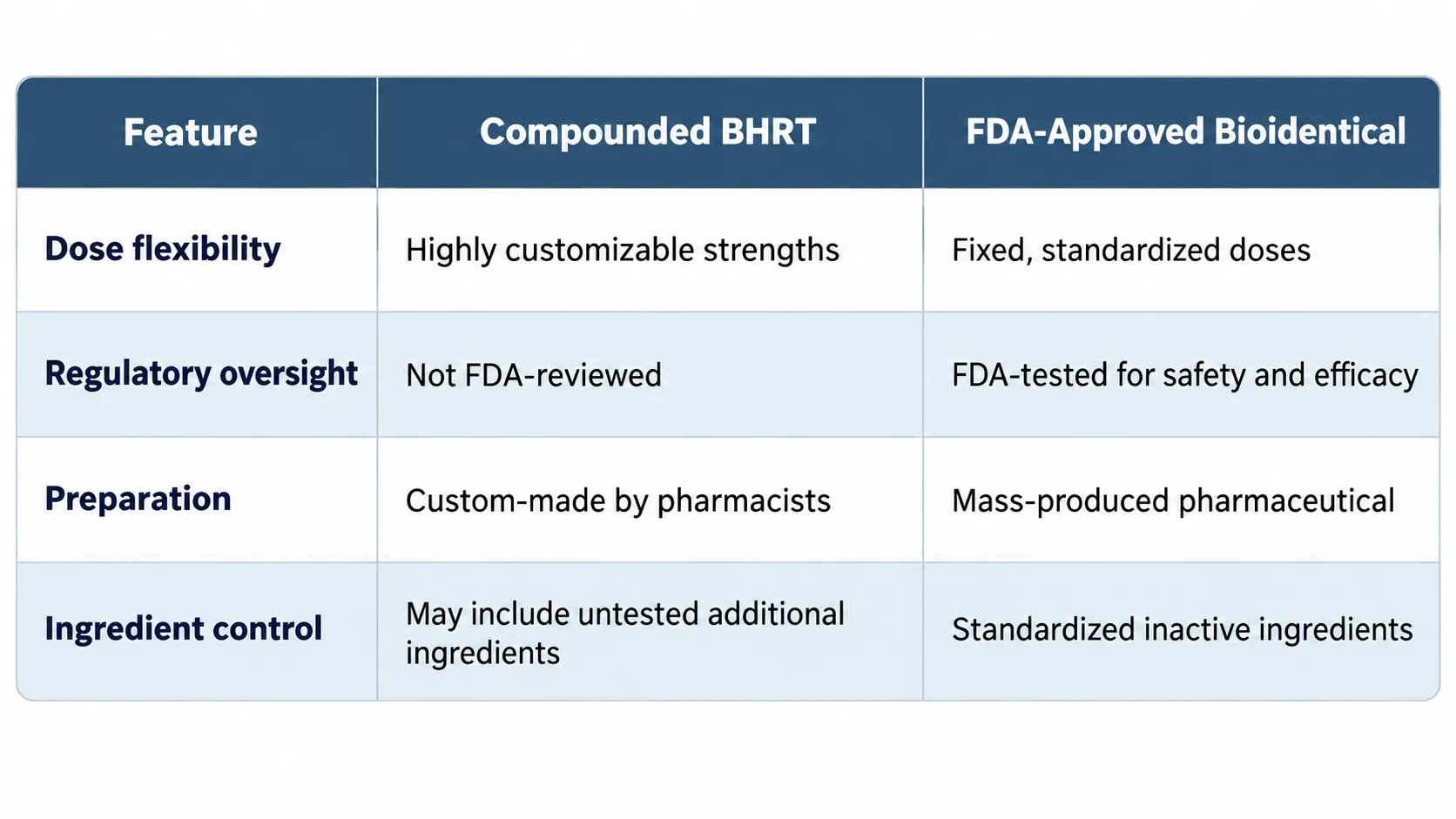
Compounded BHRT allows for precise dosing tailored to individual needs, meaning a provider can prescribe non-standard amounts such as 0.8 mg instead of a fixed 0.5 mg or 1 mg tablet. Compounded hormones can be customized based on specific lab results. Commercial hormones are FDA-approved and standardized, which offers consistency but less flexibility. Custom hormone therapy has been used for over 30 years, and approximately 1 to 2.5 million women in the U.S. use compounded hormones. That said, compounded hormone preparations may not always be safer or more effective than FDA-approved therapies, and the FDA does not oversee compounded hormone products. Patient education is essential so individuals understand exactly why a specific dose, schedule, and formulation were chosen.
Choosing the Right Delivery Method: Creams, Capsules, Pellets, and More

How hormones are delivered can matter as much as how much is prescribed. The choice of hormone delivery method significantly impacts how hormones metabolize in the body. Common options at a hormone therapy clinic include:
- Transdermal creams or gels applied daily
- Oral capsules or pills taken by mouth
- Vaginal preparations for localized symptoms
- Subcutaneous pellets inserted every few months
Transdermal delivery bypasses liver metabolism, which may lower risks of blood clots and lipid changes compared to oral estrogen. Implanted pellets provide steady release over three to seven months but are harder to adjust once placed. Some patients combine methods-for example, an estrogen cream with oral progesterone at night-for optimal hormone balance and endometrial protection in women with an intact uterus. The delivery method is chosen collaboratively based on lifestyle preferences, medical needs, and how precisely the dose needs to be fine-tuned.
Monitoring, Adjusting, and Staying Safe Over Time
Customization does not end when the prescription is written; ongoing re-evaluation is important. Hormone therapy involves ongoing tracking and adjustments based on clinical response. Most Charleston practices schedule the first follow-up within about six weeks, then again at roughly four and eight months during the first year.
Follow-up may include reviewing symptom response and checking for adverse effects such as breast tenderness, bloating, mood shifts, or androgenic signs like acne. Practitioners analyze lifestyle habits along with clinical data to improve hormone treatment outcomes over time. If symptoms persist, the dose may increase. If unwanted side effects appear, the provider may reduce the dose, change the formulation, or switch to a different delivery route.
Clinicians also monitor broader markers tied to long term health, including blood pressure, lipid panels, HbA1c, hematocrit (particularly with testosterone), and bone health indicators like DEXA scans when osteoporosis risk is relevant. This layered approach keeps the therapy safe while working toward optimal hormone levels.
Integrating Lifestyle, Peptides, and Non-Hormonal Support

Top providers rarely rely on hormones alone. A comprehensive treatment plan in Charleston typically weaves in:
- Nutrition counseling to support metabolism and reduce inflammation
- Strength training and movement strategies that promote hormonal health
- Sleep optimization protocols, since poor sleep can undermine even well-dosed HRT
- Stress management techniques that lower cortisol and protect hormone balance
Some clinics also discuss peptide therapy or other advanced interventions when appropriate and consistent with current evidence. For patients who cannot or choose not to use hormone replacement, non-hormonal prescription medications and targeted supplements may help relieve symptoms. These elements create a foundation for overall wellness that amplifies the benefits of any hormone treatment.
Making an Informed Decision About Your Treatment Options

Deciding whether personalized BHRT is right for you starts with honest conversation. Prepare questions about bioidentical hormones, the difference between compounded and FDA-approved formulations, expected timelines for improvement, and potential risks. Approximately 1 to 2.5 million women over 40 use compounded bioidentical hormones across the country, but popularity alone does not guarantee the right fit for every individual.
A responsible provider will review personal risk factors-clotting history, cancer history, cardiovascular health-and coordinate with your primary care physician or specialists as needed. Many patients experience symptoms like fatigue, weight gain, and decreased mental clarity for months or years before seeking expert guidance. If those symptoms are affecting your daily life and overall well being, scheduling a comprehensive evaluation with a qualified provider in Charleston is a practical step toward long term wellness.
Bioidentical Hormone Therapy in Charleston, SC – Charleston Healthspan Institute

At Charleston Healthspan Institute, we specialize in personalized bioidentical hormone therapy for adults throughout Charleston, South Carolina and the surrounding areas. Our clinicians use detailed lab analysis, careful dose titration, and multiple formulation options-including both FDA-approved and compounded preparations-to build a treatment plan that fits your body, your goals, and your life. We believe that expert guidance paired with ongoing monitoring leads to the safest, most effective outcomes. Whether you are experiencing menopause symptoms, age-related testosterone decline, or simply want to explore your personalized treatment options, we are here to help. Call us at (843) 375-6588 or fill out our online contact form to schedule your comprehensive hormone evaluation today.
Frequently Asked Questions
How Long Does It Usually Take to Feel Better on a Customized BHRT Plan?
Many patients notice early improvements in energy, sleep, and mood within the first few weeks of starting therapy. However, the most consistent and stable symptom relief typically develops over three to six months as doses are fine-tuned through follow-up labs and symptom check-ins. Pellet-based delivery may produce steadier results sooner due to continuous hormone release. Factors like starting hormone levels, the severity of symptoms, metabolism, and how closely a patient follows lifestyle recommendations all influence the timeline. Patience during the titration process is important because rushing to higher doses without adequate monitoring can introduce unwanted side effects that delay progress.
Can Men in Charleston Also Benefit from Personalized Bioidentical Hormone Therapy?
Yes. Men experiencing age-related testosterone decline-sometimes called andropause-can benefit significantly from customized hormone treatment. Providers evaluate total and free testosterone, sex hormones like estradiol, hematocrit, lipid panels, and prostate-specific antigen before prescribing. Treatment may include transdermal gels, injections, or subcutaneous pellets, with doses adjusted based on lab results and symptom response. Safety monitoring is critical: elevated hematocrit or changes in prostate markers may require dose reduction. Men often report improvements in energy, libido, body composition, mood, and cognitive function once optimal hormone levels are achieved and maintained through regular follow-up appointments.
What Is the Difference Between Compounded Bioidentical Hormones and Standard HRT from a Pharmacy?
Compounded bioidentical hormones are custom-made by licensed pharmacists to create specific doses and combinations that standard pharmaceutical products do not offer. They allow providers to prescribe exact strengths matched to individual lab results. However, the FDA does not oversee compounded hormone products the way it regulates commercial medications, meaning there is less standardized quality control. Conventional hormone therapy from a pharmacy uses FDA-approved formulations that have undergone rigorous testing for safety, potency, and consistency. Providers decide between these options based on each patient’s clinical needs, risk profile, insurance coverage, and whether a non-standard dose or combination is medically necessary.
How Often Will My Hormone Levels Need to Be Rechecked Once My Dose Is Stable?
Once a stable dose is achieved-typically after the first year of active titration-most providers recommend rechecking hormone levels and safety labs every six to twelve months. However, more frequent testing may be appropriate if new symptoms arise, medications change, significant weight fluctuation occurs, or a new health condition develops. Women approaching or moving through different stages of menopause may need closer monitoring as endogenous hormone production continues to shift. Annual reassessment also includes reviewing cardiovascular markers, metabolic health, and bone density when indicated. Consistent monitoring ensures that the therapy remains aligned with your evolving health needs.
Is Customized BHRT Covered by Insurance for Patients in Charleston?
Coverage varies widely depending on the insurance plan. Many patients find that office visits and diagnostic lab work are covered under standard medical benefits, but the medications themselves-particularly compounded formulations-are frequently not included in formulary lists and require out-of-pocket payment. FDA-approved bioidentical hormones such as estradiol patches or micronized progesterone capsules are more likely to be covered, sometimes with prior authorization. Some Charleston practices offer membership or bundled pricing models that include medication and monitoring. It is always advisable to verify benefits with your insurance provider before starting therapy and to ask the prescribing clinic about cost structures upfront.
Disclaimer
This article is for educational purposes only and does not constitute medical advice. Patients in Charleston, South Carolina should consult a qualified healthcare professional before starting, modifying, or discontinuing any hormone-related treatment.
Read Will My Eating Habits Be Discussed With a Weight Loss Doctor in Charleston, SC?