Peptide therapy is gaining attention among Charleston residents who wake up every morning feeling wired, anxious, or completely drained – despite getting what should be enough sleep. If that sounds familiar, your morning cortisol levels may be working against you. Cortisol ordinarily rises rapidly in the morning following waking, but when chronic stress distorts that natural curve, the spike overshoots and leaves you stuck in a stress loop before you even finish your coffee. The subtropical heat and humidity across the Lowcountry can further intensify an already reactive HPA axis. A medically supervised peptide protocol offers a way to work with your body’s natural processes rather than masking symptoms with prescription sedatives or over the counter supplements. Read on to learn how it works – and what Charleston-area patients are experiencing.
Why Charleston Residents Trust Peptide Therapy for Cortisol Management
Choosing where to explore peptide therapy is a significant health decision. Trust comes from credentials, transparency, and results – not marketing claims. Here is what to look for in a hormone therapy clinic, and what Charleston patients have come to expect:
- Licensed medical providers with hormone therapy expertise – prescription peptide therapy requires oversight and baseline lab work from licensed providers, ensuring every protocol meets South Carolina prescribing regulations
- FDA-registered pharmacy sourcing – peptides should come from FDA-registered manufacturers for safety, eliminating risks tied to impurities and unregulated supply chains
- Comprehensive lab-based monitoring – regular cortisol retesting (salivary and serum panels), metabolic markers, and symptom tracking at each follow-up
- Documented patient success – many patients report measurable improvements in morning energy, emotional balance, and stress resilience within weeks of starting peptide therapy
Self-prescribing peptides from unregulated sources is unsafe. A credible hormone doctor will require full intake labs, document health history thoroughly, and ensure every peptide protocol is individually calibrated.
Why Charleston Chooses Peptide Therapy Over Traditional Stress Medications
Traditional approaches to cortisol-related symptoms – anti-anxiety medications, antidepressants, or sedatives – often work by suppressing neurological activity broadly. They can provide short-term relief, but they also carry dependency risks, cognitive dulling, and side effects that compound over months.
Peptide therapy works differently. Peptide therapy utilizes short chains of amino acids that act as biological messengers, targeting specific biological functions at the receptor level. Rather than blanketing the nervous system, specific peptides target neural and endocrine pathways for stress recovery, allowing the hypothalamic-pituitary-adrenal axis to recalibrate on its own terms.
Here is what sets this approach apart for cortisol management:
- Upstream modulation instead of downstream suppression – certain peptides influence sleep architecture, growth hormone release, and inflammatory cascades that feed into cortisol dysregulation, addressing root causes rather than end symptoms
- Personalized protocol design – treatment is built around your individual cortisol curve, sleep patterns, and metabolic profile, not a one-size prescription
- Fewer systemic side effects – peptide therapy is generally well-tolerated under professional supervision, with common side effects limited to injection site irritation and headaches rather than the cognitive or metabolic burdens of long-term pharmaceutical use
- Sustainable hormone balance – the goal is long-term normalization of your stress response, not dependence on a daily pill to keep anxiety at bay
Peptide therapy supports emotional resilience during stress by helping restore the body’s ability to regulate its own cortisol output – a critical distinction for patients who have cycled through medications without lasting results.
Read Can Peptide Therapy Fix Hormone Burnout? Recovery Tips for Residents in Charleston, SC
Our Cortisol-Targeting Peptide Services
Morning cortisol spikes do not exist in isolation. They are connected to sleep quality, systemic inflammation, growth hormone output, and metabolic health. That is why effective cortisol management requires selecting key peptides that address each contributing factor. Below are the primary peptide services used in cortisol-focused protocols.
Delta Sleep Inducing Peptide (DSIP) Therapy
Poor sleep is one of the most direct drivers of exaggerated morning cortisol. When slow-wave sleep is fragmented – common in high-stress professionals and shift workers – the HPA axis never fully resets overnight. The result is a cortisol surge that hits too hard and too early.
Delta sleep inducing peptide promotes deep sleep and lowers ACTH levels, the upstream signal that triggers cortisol release from the adrenal glands. DSIP helps normalize circadian rhythm amplitude and slow-wave sleep coupling, which is the mechanism through which it influences morning cortisol patterns. Research on DSIP suggests it engages GABAergic and delta-opioid receptor pathways to enhance restorative sleep phases.
Who benefits most: Patients with stress-related sleep disruption, those waking frequently during the night, and anyone whose morning exhaustion persists despite adequate time in bed.
Expected outcomes: Improved restful sleep, more stable morning energy, and reduction in the anxious, wired feeling upon waking. Peptide therapy can improve sleep quality and emotional balance when DSIP is properly calibrated within a broader protocol.
Growth Hormone Secretagogues (CJC-1295/Ipamorelin)
Cortisol and growth hormone exist in a delicate balance. When cortisol stays elevated, it drives muscle catabolism, visceral fat storage, and impaired physical recovery. Over time, chronic stress keeps cortisol levels elevated while suppressing the pituitary gland’s output of growth hormone – accelerating aging and metabolic decline.
CJC-1295 and Ipamorelin stimulate growth hormone release through the GHS receptor pathway. Among growth hormone secretagogues, Ipamorelin stands out because it promotes more growth hormone without substantially stimulating additional ACTH or cortisol – making it a cortisol-neutral option for patients who already have elevated morning spikes. Research confirms that GH signaling can suppress cortisol production under certain conditions; in one study, exogenous GH therapy reduced afternoon cortisol production from 0.70 ± 0.30 mg/h to approximately 0.40 ± 0.11 mg/h over seven days.
Who benefits most: Patients experiencing cortisol-driven muscle loss, declining lean muscle mass, increased visceral fat, and impaired fat metabolism.
Expected outcomes: Improved body composition, enhanced muscle growth and tissue repair, better fat breakdown, and greater stress resilience. These peptides also support cognitive function, brain health, and healthy aging through downstream effects on cell regeneration and mitochondrial health. NAD+ supports mitochondrial health and cellular energy production and is sometimes paired alongside growth hormone secretagogues for comprehensive metabolic support.
BPC-157 Anti-Inflammatory Support
Systemic inflammation is a significant but often overlooked driver of HPA axis overactivation. When the gut barrier is compromised – common in high-stress individuals – inflammatory signaling molecules circulate more freely, keeping cortisol output elevated as part of the immune response.
BPC-157 promotes tissue repair and modulates inflammation, primarily through its effects on gut mucosal healing, blood vessels, and soft tissue injuries. By reducing systemic inflammation at the source, BPC-157 can help remove one of the key inputs that keeps the cortisol alarm ringing.
It is important to note that human clinical evidence for BPC-157 remains limited – fewer than 30 subjects across all published studies, with no randomized controlled trials completed to date. The FDA has identified potential safety concerns with compounded BPC-157, including immunogenicity and impurity risks. This is precisely why medical supervision and sourcing from FDA-registered pharmacies matter.
Who benefits most: Patients with gut health issues contributing to stress hormones, those with chronic inflammatory conditions, or individuals recovering from soft tissue injuries.
Expected outcomes: Reduced gut-driven inflammation, supporting tissue repair and cellular repair processes, and a calmer baseline stress response. Peptide therapy can speed tissue repair and reduce inflammation when BPC-157 is used appropriately under clinical oversight.
How Our Cortisol Management Process Works
Starting peptide therapy for cortisol management is not an impulse decision – it is a structured clinical process. Here is what to expect from first contact through ongoing optimization.
Initial Assessment and Cortisol Testing
The process begins with a comprehensive intake. A licensed clinician reviews your health history, current medications, sleep patterns, stress levels, and morning symptoms. If true cortisol excess is suspected, specific testing is needed for diagnosis – not just a single blood draw.
Cortisol pattern testing typically includes:
- Salivary cortisol measured at four time points (morning, midday, evening, bedtime) to map your diurnal curve
- 24-hour urinary cortisol for total daily output assessment
- ACTH levels to evaluate pituitary-adrenal communication
- Inflammatory markers (CRP, IL-6) to identify inflammation-driven cortisol elevation
- Sleep quality evaluation via validated questionnaires or actigraphy
This data establishes whether your morning spike is a normal cortisol awakening response or a clinically significant overshoot. Increased morning cortisol levels do not necessarily indicate an unhealthy state – context and pattern matter. A medical evaluation also rules out conditions like Cushing’s syndrome or adrenal insufficiency that require different treatment pathways entirely.
Personalized Peptide Protocol
Based on your assessment results, your clinician designs a personalized treatment plan selecting specific peptides matched to your cortisol pattern, sleep profile, and metabolic goals.
Protocol design considerations include:
- Peptide selection – DSIP for sleep-dominant dysfunction, Ipamorelin for GH-cortisol rebalancing, BPC-157 for inflammatory contributors. Selank enhances mood and reduces anxiety with fewer side effects and may be incorporated for patients with prominent mood regulation concerns
- Administration training – peptide injections are typically subcutaneous; your provider trains you on proper technique, injection rotation, and storage
- Dosing schedule – timing relative to sleep onset can influence cortisol outcomes; protocols are calibrated to your circadian rhythm
- Lifestyle integration – peptides should be paired with foundational habits for successful protocols, including morning sunlight exposure (which anchors natural circadian cortisol awakening responses), stress management practices, dietary optimization, and sleep hygiene
Peptide therapy must be prescribed by licensed clinicians. In South Carolina, only practitioners licensed under state regulations may issue prescriptions, and compounding pharmacies must meet both state and federal standards.
Ongoing Monitoring and Adjustment
A peptide protocol is not static. Regular follow-ups – typically biweekly for the first month, then monthly – track both subjective and objective progress.
Monitoring includes:
- Symptom tracking – morning energy levels, brain fog reduction, mood regulation, emotional stability, and sleep quality
- Lab retesting – repeat salivary cortisol curves at 4–6 weeks to measure normalization, plus metabolic panels for blood sugar stability and hormone production markers
- Side effect assessment – monitoring for receptor desensitization, glycemic shifts, injection site reactions, or hormonal feedback changes
- Protocol adjustment – peptide type, dosage, and timing are modified based on response; some patients transition between peptides as their cortisol pattern shifts
Peptide therapy promotes a calmer state of mind when the protocol aligns with the patient’s evolving physiology. Many patients notice meaningful improvements in mental clarity, emotional resilience, and morning energy within the first three to six weeks. Certain peptides help balance neurotransmitter production for mood stability, which further supports the overall cortisol management goal.
Start Your Journey to Balanced Morning Energy
You do not have to accept waking up anxious, exhausted, or wired as your new normal. When morning cortisol spikes are driving your symptoms, a targeted, medically supervised peptide protocol can help restore the balance your body has been missing – so you wake up feeling genuinely refreshed and ready for your day.
Specific regulatory peptides calm overactive stress responses in the HPA axis, and some peptides may indirectly influence stress and sleep regulation in ways that traditional approaches simply do not address. Peptide therapy can help regulate cortisol levels and help lower chronic stress hormone output when combined with proper clinical oversight and foundational lifestyle changes.
Peptide Therapy in Charleston, SC – Charleston Healthspan Institute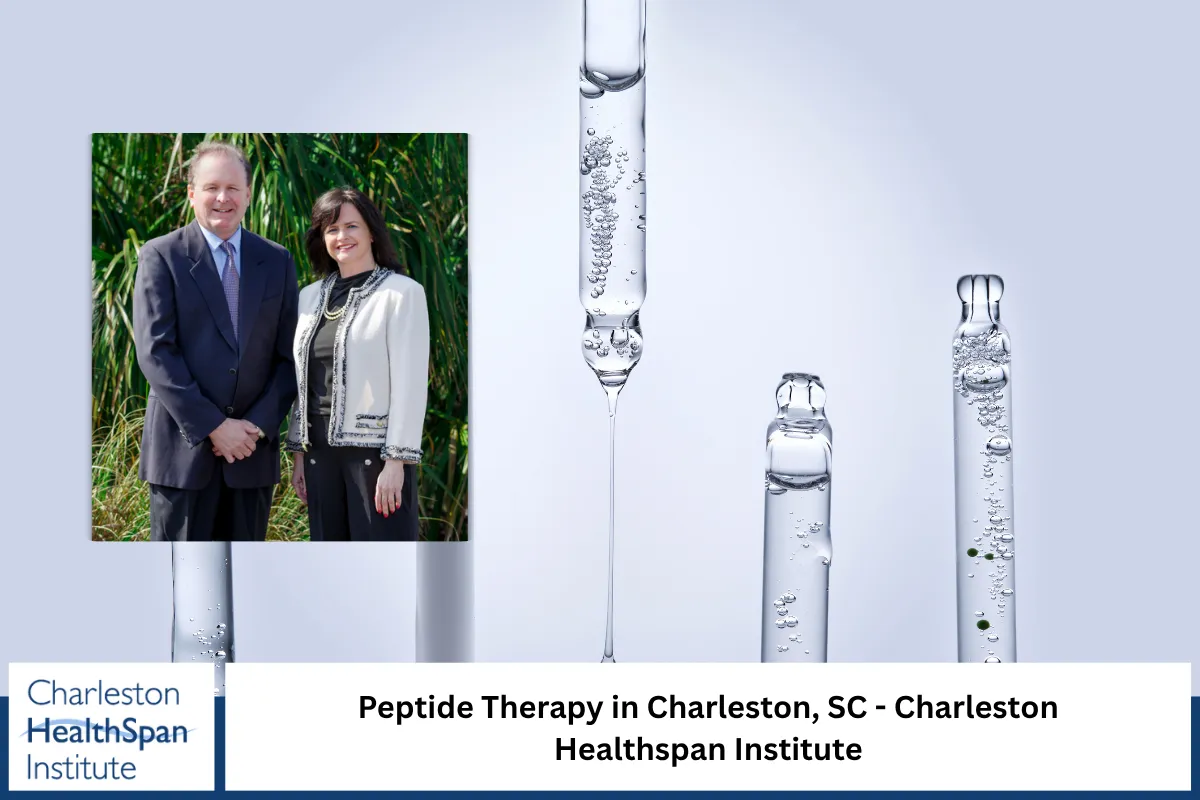
At Charleston Healthspan Institute, we specialize in medically supervised peptide therapy designed to help you reclaim your mornings, your energy, and your resilience. Our team of licensed medical providers builds every peptide protocol around your unique lab results, health history, and wellness goals – because cortisol management is never one-size-fits-all. We source all peptides from FDA-registered pharmacies and monitor your progress with regular lab work and clinical follow-ups. Whether you are dealing with stubborn morning cortisol spikes, declining lean muscle, disrupted sleep, or chronic fatigue, we are here to guide you through a science-backed approach to hormone balance. If you have been searching for peptide therapy in Charleston, call us at (843) 375-6588 or fill out our contact form to schedule your consultation. We proudly serve Charleston and the surrounding Lowcountry communities.
Frequently Asked Questions
Can peptide therapy help with weight management related to high cortisol?
Yes. Elevated cortisol promotes visceral fat storage and disrupts fat metabolism, making weight management significantly harder regardless of diet and exercise. Peptide therapy supports weight management by addressing cortisol imbalance at the hormonal level. Growth hormone secretagogues like Ipamorelin encourage lean muscle mass preservation and improved body composition, which shifts your metabolic rate favorably. Additionally, certain peptides help regulate appetite and stabilize blood sugar levels, reducing the cravings and energy crashes that often accompany cortisol dysregulation. However, peptides are not standalone weight loss drugs – they work best alongside nutritional optimization, movement, and stress management. Your clinician will monitor body composition changes through follow-up assessments to ensure measurable progress.
Does peptide therapy affect skin health or aging concerns?
Cortisol accelerates skin aging by breaking down collagen and reducing skin elasticity. When morning cortisol spikes become chronic, many patients notice thinning skin, slower wound healing, and increased wrinkles. Peptide therapy can stimulate collagen production for improved skin health, particularly through growth hormone-releasing peptides that elevate GH and IGF-1 levels. Higher growth hormone output supports skin firmness, cell regeneration, and overall tissue integrity. BPC-157 also contributes to cellular repair processes that benefit skin and connective tissue. While skin health improvements are secondary to cortisol management goals, many patients report noticeable changes in complexion and recovery from minor injuries as part of their broader treatment experience.
How does Charleston’s climate specifically affect cortisol regulation?
Charleston’s subtropical climate – characterized by high heat, humidity, and extended daylight hours – creates environmental conditions that influence the HPA axis. Heat stress triggers additional cortisol release as the body works to maintain thermoregulation. Disrupted sleep from warm overnight temperatures further compounds morning cortisol spikes, especially during summer months. Morning sunlight exposure anchors natural circadian cortisol awakening responses, but excessive afternoon heat can interfere with recovery and physical performance. A well-designed peptide protocol accounts for these regional factors, and clinicians in the Charleston area understand how seasonal environmental patterns interact with hormonal health. Lifestyle adjustments specific to Lowcountry living – hydration, timing of outdoor activity, and cooling strategies – complement the clinical protocol.
Can peptides enhance sexual wellness and cognitive performance alongside cortisol management?
Chronic cortisol elevation suppresses multiple hormonal pathways, including those governing sexual health and cognitive function. Elevated cortisol reduces testosterone and estrogen production, impairs libido, and disrupts brain chemistry involved in focus and memory. Peptides can enhance sexual wellness and intimacy by supporting hormone balance and improving blood flow through vascular repair mechanisms. On the cognitive side, peptide therapy supports focus, memory, and mental clarity – particularly when sleep normalization through DSIP reduces brain fog and restores attention. Peptides can reduce feelings of anxiety and improve mood, creating a neurochemical environment more conducive to both intimate connection and sustained mental performance. These benefits often emerge naturally as cortisol levels normalize.
What happens if I stop peptide therapy after my cortisol levels normalize?
Discontinuation should always be guided by your clinician based on lab trends and symptom stability. Some patients achieve lasting cortisol normalization and can taper off peptides while maintaining results through lifestyle habits – including sleep hygiene, stress management, and exercise. Others with deeply entrenched HPA axis dysfunction may benefit from periodic maintenance cycles. The body’s ability to maintain hormone balance after treatment depends on how thoroughly the contributing factors – inflammation, sleep disruption, metabolic dysfunction – have been addressed. Abrupt cessation without clinical guidance is not recommended, as hormonal systems may need time to stabilize. Your provider will design a tapering strategy that protects your progress and monitors for any return of symptoms.
Disclaimer: This article is for educational purposes only and does not constitute medical advice. Peptide therapy outcomes vary by individual. Always consult a licensed clinician in South Carolina before starting any hormone-related treatment protocol.
Read Peptide Therapy vs. Traditional HRT: A Hormone Doctor in Charleston, SC Explains the Difference